All-weather trail pack3 colors · 18L
$96Shopify & e-commerce
Build an online store that makes products easier to find and buy.
A store can lose customers when products are hard to compare, collections are confusing, mobile pages feel crowded, or important information appears too late. We help new and established businesses launch or improve Shopify and other suitable e-commerce experiences—from product organization and storefront pages to checkout paths, email connections, and measurement.
Platform, theme, app, payment, shipping, tax, inventory, and compliance needs are confirmed during scope. We do not claim past Shopify customer results that have not been documented.
Field Supply Co.Search · Account · Cart (1)
Built for changing weather.
Packable field layer4 sizes · 2 colors
$68All-weather trail pack
Water-resistant shell, padded straps, 18L capacity, and a two-year repair policy.
Color: Slate$96
Add to cartDiscoverProductCartCheckout
Every product page asks the customer to make a decision.
Clear information, sensible collections, dependable mobile behavior, and a direct checkout path reduce the work customers must do before they can buy.
Two useful starting points
Launch the first store—or improve the one customers already use.
The work should match the business stage. A new seller needs a dependable foundation; an established store may need a focused repair instead of another rebuild.
Turn a product idea into a store customers can navigate.
Organize the initial catalog, collections, policies, navigation, product content, supported payments, and launch checks without building unnecessary complexity first.
- Theme and storefront setup
- Products, variants, collections, and menus
- Shipping, payment, policy, and domain coordination
- Analytics and essential email connections
Fix the friction between discovery and checkout.
Review where shoppers get lost, which pages lack useful product information, and whether apps or integrations add manual work or unreliable data handoffs.
- Product and collection improvements
- Mobile navigation and shopping flow
- Landing pages and merchandising support
- Email, CRM, feed, and measurement repairs
Common store friction
Small shopping problems can create expensive manual work.
A store should help customers choose confidently and give the team reliable information after an order, signup, or support request.
Products are hard to find.
Collections, filters, search, labels, or menus do not match how customers naturally browse the catalog.
Product pages leave questions.
Important details about options, fit, use, shipping, returns, or trust appear late or remain unclear.
Mobile shopping feels cramped.
Images, variants, sticky controls, menus, or apps compete for space on the screen customers use most.
Systems create extra cleanup.
Orders, email permissions, product feeds, customer records, or analytics reach the wrong place or arrive without context.
A connected shopping journey
The storefront is only one part of the sale.
Each stage should give the customer enough information to continue and give the business a dependable record of what happened.
Discover
A useful collection, search result, ad, email, or shared link leads to an appropriate page.
Evaluate
Product details, imagery, options, policies, and proof answer the questions needed to choose.
Buy
Cart and checkout present supported payments, shipping, discounts, and required information clearly.
Continue
Order details, permission-aware email, support, and reporting reach the systems responsible for the next step.
Checkout customization and data access vary by platform, plan, theme, payment setup, region, and installed apps. Those boundaries are confirmed before implementation.
Illustrative new-store scenario
Launch a focused catalog before building every possible feature.
A new product business can create a credible buying path without starting with a large custom build.
A founder has products, images, and a shipping plan—but no clear store structure.
The initial catalog has several options and bundles. Product names make sense internally, but customers do not yet know the differences. The founder is also deciding which emails, policies, payments, and reports are necessary for launch.
Build the shortest dependable path to a completed order.
The store starts with clear collections, complete product pages, a tested mobile cart and checkout, essential policies, and the agreed email and measurement connections.
- Organize the catalog around customer choices.
- Build and review the responsive storefront.
- Configure supported commerce essentials.
- Test orders, notifications, and measurement.
This is a fictional scenario, not a client result or a promise of sales. Actual launch scope depends on the products, platform, operations, and legal requirements.
Relevant product-presentation experience
Explain a product clearly before asking for the next step.
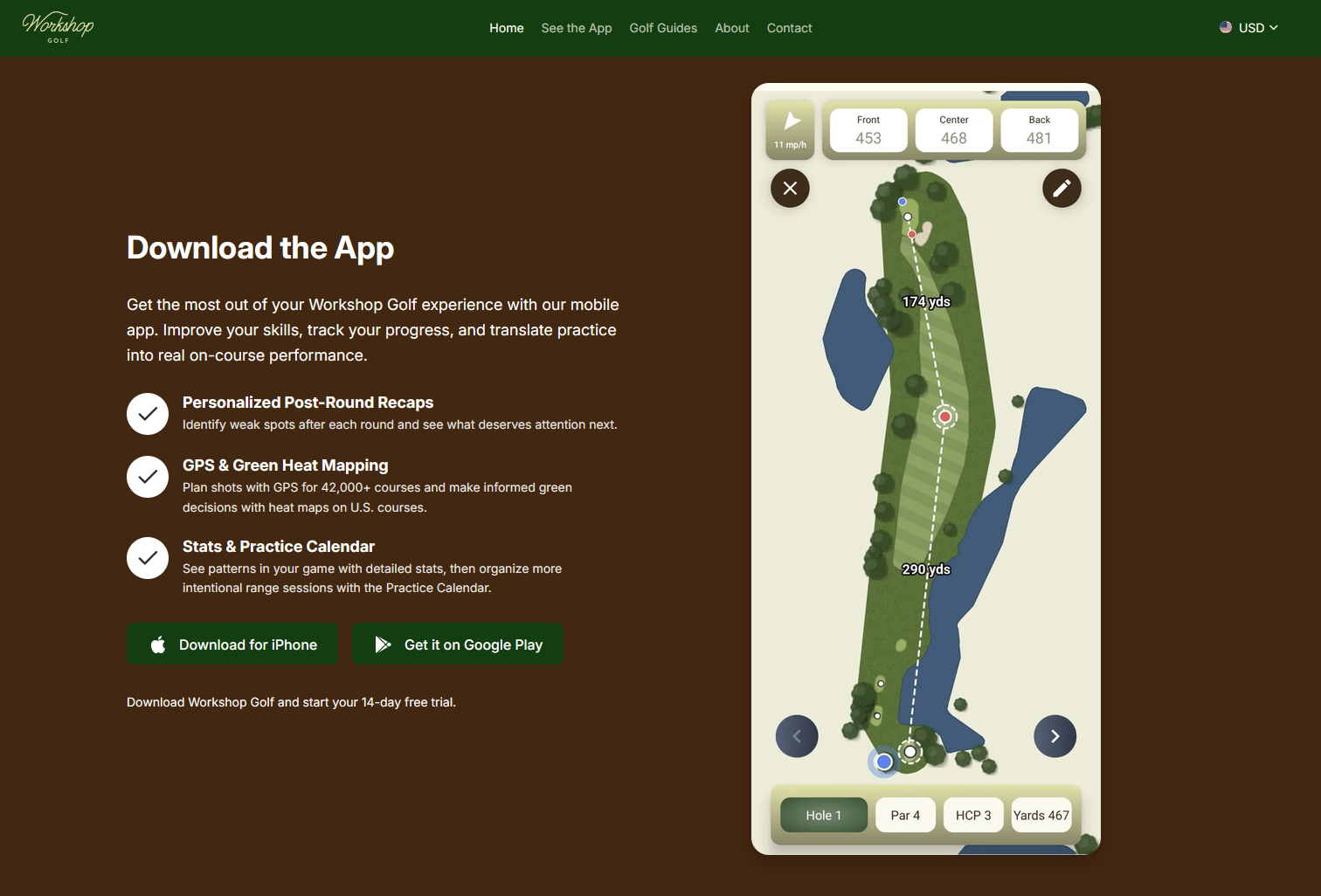
Workshop Golf is an affiliated product business with a public website and published mobile apps. Its approved website screenshot demonstrates product presentation and responsive customer paths.
What it shows—and what it does not
Product value needs a clear public explanation.
The site organizes a complex digital product around features, use, and direct app-store destinations. The same clarity principle applies to products, collections, and e-commerce landing pages.
Evidence boundary: Workshop Golf is not presented as a Shopify implementation, online-store client result, checkout project, or proof of sales. Generis Marketing will scope commerce work from the actual platform and requirements rather than borrow an unsupported outcome.
What we can work on
Connect the catalog, storefront, checkout path, and supporting systems.
Projects can focus on one friction point or combine the related work required for a dependable launch or improvement.
Setup, themes, and structure
Supported platform setup, theme configuration, domains, core pages, navigation, policies, and launch readiness.
Products and collections
Product content, variants, media, categories, collections, filters, related items, and discovery paths.
Mobile and checkout friction
Responsive product pages, carts, supported checkout settings, forms, and clearer information at decision points.
Email, CRM, feeds, and measurement
Permission-aware email, supported customer or order handoffs, product feeds, analytics, and selected advertising events.
How we work
Scope the shopping path and the operations behind it.
A polished theme cannot solve unclear products, unsupported workflows, or missing ownership. We define those constraints before implementation.
Map products and customer decisions.
Clarify the catalog, options, collections, customer questions, and what makes a purchase path trustworthy.
Confirm platform and operating needs.
Review shipping, payments, taxes, policies, fulfillment, email, inventory, access, and other requirements in scope.
Build the storefront and connections.
Implement the approved pages, product organization, navigation, settings, and supported integrations.
Test realistic customer paths.
Check mobile browsing, variants, cart, checkout, notifications, consent, links, and agreed measurement with controlled test scenarios.
Connected services
A store may need focused website, integration, or measurement help.
Use the service most closely matched to the current problem rather than bundling work the business does not need.
Related serviceWebsite and landing-page workFor customer-facing pages that do not require a full commerce implementation.Related serviceReliable information handoffsConnect supported forms, customer context, CRM systems, and other tools.Pricing and scopeCompare project optionsFocused improvements, defined projects, and ongoing support.
Common questions
Shopify and e-commerce questions
Can you help launch a new store with no sales history?
Yes, when the products, operations, platform, and launch responsibilities can be clearly scoped. The first release should establish a dependable shopping path and measurement foundation; it cannot guarantee demand or sales.
Do you only work with Shopify?
No. Shopify is a primary platform we can scope, but another suitable platform may be appropriate when its features, ownership, integrations, and operating requirements better fit the business.
Can you improve an existing theme instead of replacing it?
Often. We review the theme, apps, custom code, mobile behavior, and target improvement first. A focused product, collection, navigation, or integration repair may be more sensible than a complete rebuild.
Can you reduce checkout abandonment?
We can investigate and improve supported sources of friction, such as unclear information, mobile usability, cart behavior, or checkout configuration. A change does not guarantee a particular conversion rate because demand, product-market fit, price, trust, shipping, competition, and other factors also matter.
Can you connect email, analytics, or a CRM?
When the platform and tools provide suitable supported options. We confirm consent, fields, matching, event behavior, ownership, failure handling, and testing scope before implementing the connection.
Build the next useful version
Make the store easier to shop—and easier to operate.
Tell us whether you are launching, repairing, or improving an online store. We’ll help define the product, storefront, checkout, integration, and measurement work that belongs in the project.